


Issue #7 - April 2026 North Star Briefing sails where headlines meet consequences. This issue charts the…
North Star Briefing October 2025

ISSUE # 1 – October 2025
Editor’s Note
North Star Briefing sails where headlines meet consequences. This issue charts the mortgage mood swing, a housing market that’s clogged not crashing, and the incentive math behind “Hurricane Donald.” We scan Europe’s shadow war, savor a five-course victory meal, and ask harder questions in Moral Compass.
Need a steady hand?
I help bankable-but-not-bank-shaped clients identify and fix the root problem—then fund the right solution.

-
Rate Radar – Power Plays, and the Great Mortgage Mood Swing
-
Harbor Report –The Housing Market: Still Bonkers, Just Different
-
Stateside Signals – Eight Months of Hurricane Donald
-
Open Seas Outlook – Europe’s Shadow War No More Shadows
-
Galley & Grit – Royal Menus & Rebel Malts
-
Moral Compass – Finding God in the AppStore
-
Beacon in the Storm – People Watching
Ready to move? Free coaching consult or capital options—your call.
858-229-7199 – jdevilliers@c2financial.com

Power Plays, and the Great Mortgage Mood Swing

In a display of political theatre that would make Shakespeare rise from the grave for a front-row seat, President Trump took to the Federal Reserve with the subtlety of a wrecking ball on espresso. First, he turned up the heat on Fed Chair Jerome Powell, strongly encouraging (read: thunderously demanding) a generous interest rate cut. Then, like a magician pulling governors out of hats, he attempted to give Governor Lisa Cook the boot while sliding Stephen Miran into what appeared to be a now-vacant seat — except it wasn’t.
You see, Lisa Cook, apparently not one to be evicted without a legal battle and a flair for courtroom drama, sprinted to the Supreme Court and got herself a temporary stay. She’ll continue sitting on the Fed’s board while allegations of mortgage fraud swirl like gossip at a country club. These accusations, if true, would have given Trump the green light to send her packing. But for now, she’s still in the chair — with a very tense cushion.
As for Mr. Miran, he’s technically filling the tail end of former Governor Adriana Kugler’s term — she’s off to the calm pastures of academia where no one asks you to explain basis points on national television.
Meanwhile, despite all the shouting from the peanut gallery (read: the Oval Office), the Fed — ever the cautious, spreadsheet-loving institution — offered a mere 0.25% interest rate cut. President Trump, of course, wanted a larger slash. He probably would’ve preferred negative rates and a complimentary foot massage, but alas, inflation still exists.
Now to the mortgage market, which, like a moody teenager, refuses to behave as expected. The 30-year fixed mortgage rate — a darling of dinner table discussions everywhere — had already dropped to nearly 6% before the Fed even opened its mouth. Then, after the announcement? It climbed to 6.5%, which, to put it lightly, was not the market’s idea of a good time.
Why the mismatch? Well, contrary to popular myth, mortgage rates don’t obediently follow the Fed’s lead like ducklings behind Mama Powell. Instead, they take cues from mortgage-backed securities (MBS), particularly the spread between MBS yields and the 10-year Treasury, which is considered a “risk-free” benchmark — unless you’re counting emotional risk, in which case, all bets are off.
Investors demand a premium on MBS to compensate for the terrifying prospect that people might refinance, move, or stop paying altogether — shocking, I know. That premium fluctuates based on market volatility, credit risk, and whether investors had a good breakfast that morning.
Need clarity?
I help find the strategy that earns its financing: address the problem, then fund what works.



The Housing Market: Still Bonkers, Just in a Different Way
Once upon a pandemic, Americans lost their minds—and their square footage. In 2021, over 6.5 million existing homes were flying off the shelves like toilet paper in March 2020. Home prices soared. Inventory plummeted. By February 2022, the number of homes for sale nationwide had collapsed to a pitiful 346,514—roughly the number of snacks in your pantry during lockdown.
Fast-forward to August 2025, and inventory has done a spectacular Houdini reversal, rising to just over 1 million listings (1,098,068, to be precise—because economists enjoy false precision). Existing home sales in that same month came in at a modest 4 million annually. That’s a big shift from the pandemic boom and eerily like the 2008–2012 period, a time when housing prices dropped over 30%, and everyone suddenly remembered what “foreclosure” meant.
And yet—cue the dramatic organ music—home prices keep inching higher. Yes, still. Slowly, grudgingly, like your uncle admitting he might’ve been wrong about Bitcoin.
But don’t rush to the bomb shelter just yet. While comparisons to 2008 are inevitable, they’re also lazy. Back then, the whole party was brought down by a Jenga tower of toxic mortgage-backed securities. In 2025? No obvious financial apocalypse looms. In fact, the broader economy is… annoyingly stable. Unemployment is low, GDP is fine, and no one’s baking mortgages into derivatives like it’s 2006.
So, what’s clogging the market this time? Let’s call it a cocktail of complications:
- Sky-high home prices
- Mortgage rates that could qualify as medieval torture devices
- A nation of homeowners locked into impossibly low rates and refusing to move
- Stagnant wages
- And a dash of good old-fashioned credit card debt
The result? Transactions are down. Way down. But don’t confuse stagnation with death. Homes are still selling, just more like a British queue than a Black Friday stampede.
Take “Days on Market”—a sort of real estate speedometer. Nationally, homes are sitting around for 60 days before finding a buyer. That’s longer than in the frothy COVID days, but still faster than the 80-day average pre-pandemic. Buyers, it seems, still want to buy. They’re just pickier now—and understandably so, given the monthly mortgage payment now rivals the GDP of a small island nation.
As for interest rates, don’t bet the house on them coming down dramatically anytime soon. The Fed, like a stern Victorian nanny, is still frowning at inflation. Which means it may be time for sellers to blink first. Lower prices or keep staring at that “For Sale” sign for the next few months (or years).
Of course, these are national figures. Real estate, like barbecue sauce preferences, is regional. What holds true in Boise may be nonsense in Brooklyn. Every state, city, and zip code has its own quirks.
So: the market’s not crashing. It’s just… clogged. And until we find the economic equivalent of Drano, don’t expect a dramatic plot twist.

Ready to move? Walk out of our first consultation with a 3-step plan that makes financing optional, realistic—and powerful when used.
With access to C2 Financials’ 100+ lenders and decades of personal experience in building, turning around and managing companies, raising capital, and running M&A I can help provide solutions to maximize your operations and secure optimal funding.
858-229-7199 – jdevilliers@c2financial.com


The Economic Stormfront: Eight Months of Hurricane Donald
Back in mid-2024, national polls showed that a clear majority of Americans believed the country was headed in the wrong direction. Nothing new there. Over the past few decades, presidents from both parties—Clinton, Bush, Obama, and Biden—have acknowledged key issues like illegal immigration and unbalanced international trade. They even agreed on many of the potential fixes. But once in office, that consensus seemed to evaporate into hand-wringing and gridlock.
Donald J. Trump was elected—again—this time as the 47th President of the United States. By January 2025, the doors of the White House swung open, and with them came Hurricane Donald. Washington hasn’t been the same since.
In just eight months—light speed by D.C. standards—the Trump administration has unleashed a whirlwind of policy decisions that have reshaped America’s domestic and foreign landscape:
- Illegal immigration? Shut down hard. Over 2 million undocumented immigrants have left including more than100,000 undocumented immigrants deported.
- Global trade? Reciprocal tariffs now blanket nearly every U.S. trading partner.
- 1Foreign Aid? Cancelled programs where 10% of aid reached the intended recipients.
- Bureaucracy? Dismantled. More than 100,000 federal employees let go.
- Crime? The military has been deployed in cities long plagued by crime and violence.
- Foreign policy? The U.S. is now actively involved in conflicts from Ukraine to Gaza, from Armenia to Kashmir, and even tensions in Southeast Asia.
- NATO? Pressured into ramping up defense budgets—beyond their own commitments.
- Drug smuggling? U.S. military interdiction now spans Mexico to Venezuela.
- Pharmaceuticals? Americans are finally seeing lower drug prices, after decades of subsidizing cheaper meds abroad.
- Foreign investment? Trillions are flowing into U.S.-based manufacturing.
It’s been loud, messy, and divisive—but undeniably fast.
Naturally, this approach has set off alarms around the world. Trump’s brash, erratic style hasn’t exactly built bridges. But even his critics admit: Washington has never moved like this.
An honest economist—who, let’s face it, does their best work in hindsight—might have predicted disaster. Mass deportations? Labor shortages. Tariffs? Rising prices and inflation. Bureaucracy cuts? Job losses, fewer contracts, and maybe a recession. Alienating allies? Damaged exports and shrinking global markets. The stock market should’ve tanked by now, right?
And yet, here we are.
Despite those gloomy projections, a different story may be unfolding beneath the surface. Onshoring of production could revitalize American industry. A leaner federal government might reduce waste. A more self-reliant Europe, coupled with a more assertive U.S. trade policy, could rebalance the economic playing field.
Whether you see it as reckless or revolutionary, one thing is clear: we’ve only made it through 8 months. There are 40 more to go.
Buckle up.
Need a steady hand?
I help bankable-but-not-bank-shaped clients identify and fix the root problem—then fund the right solution.

Europe’s Shadow War Is No Longer in the Shadows
When The Telegraph likened Europe’s current peril to “its Pearl Harbor moment,” it wasn’t hyperbole. The warning came alongside an urgent call from former Lithuanian Foreign Minister Gabrielius Landsbergis, who declared that Vladimir Putin’s hybrid war is dragging the West toward a direct confrontation. That alarm is not without cause. Russian MiG-31 fighter jets have breached Estonian airspace. Swarms of unidentified drones have disrupted Polish airports and surveyed sensitive infrastructure. A shadow war is unfolding across Europe, and the shadows are getting darker.
The frontlines of this conflict are no longer limited to the battlefields of Ukraine. The Kremlin’s campaign now extends into the airspace and cyber systems of NATO countries. Each drone strike, each violation of sovereign skies, is part of a broader strategy: test the West’s tolerance, exploit its divisions, and probe its readiness.
These provocations are not new, but they are escalating. And they demand a sober understanding of both history and intent.
Russia’s military record offers a mixed—and often sobering—lesson in overreach. The war in Ukraine, now entering its third year, was supposed to be a swift “special military operation.” It has become a grinding conflict, with estimates suggesting over a million Russian casualties. The Kremlin has found itself locked in a war of attrition it cannot easily escape.
This is not the first time Moscow has underestimated its opponents or overestimated its own reach. Russia’s disastrous war in Afghanistan (1979–1989), its bloody but inconclusive interventions in Hungary (1956) and Czechoslovakia (1968), its humiliation in the Russo-Japanese War (1905), and its costly struggle against Finland in 1940 all point to a historical pattern: initial aggression, followed by strategic miscalculation.
Even so, to dismiss current tensions as exaggerated would be a mistake. While Russia may stumble in long-term occupations, it excels in disruption, disinformation, and destabilization—especially when it can avoid the cost of open war. And that is precisely what makes this moment dangerous.
If history teaches anything, it’s that wars are rarely predictable. Europe twice stumbled into world wars not from grand designs, but from missteps, misreads, and the failure to contain early provocations. Today’s drone flights and airspace violations may seem minor—until they aren’t.
Europe is not sleepwalking into war. But it is being tested. Whether it answers with unity and resolve—or confusion and delay—may define this era.
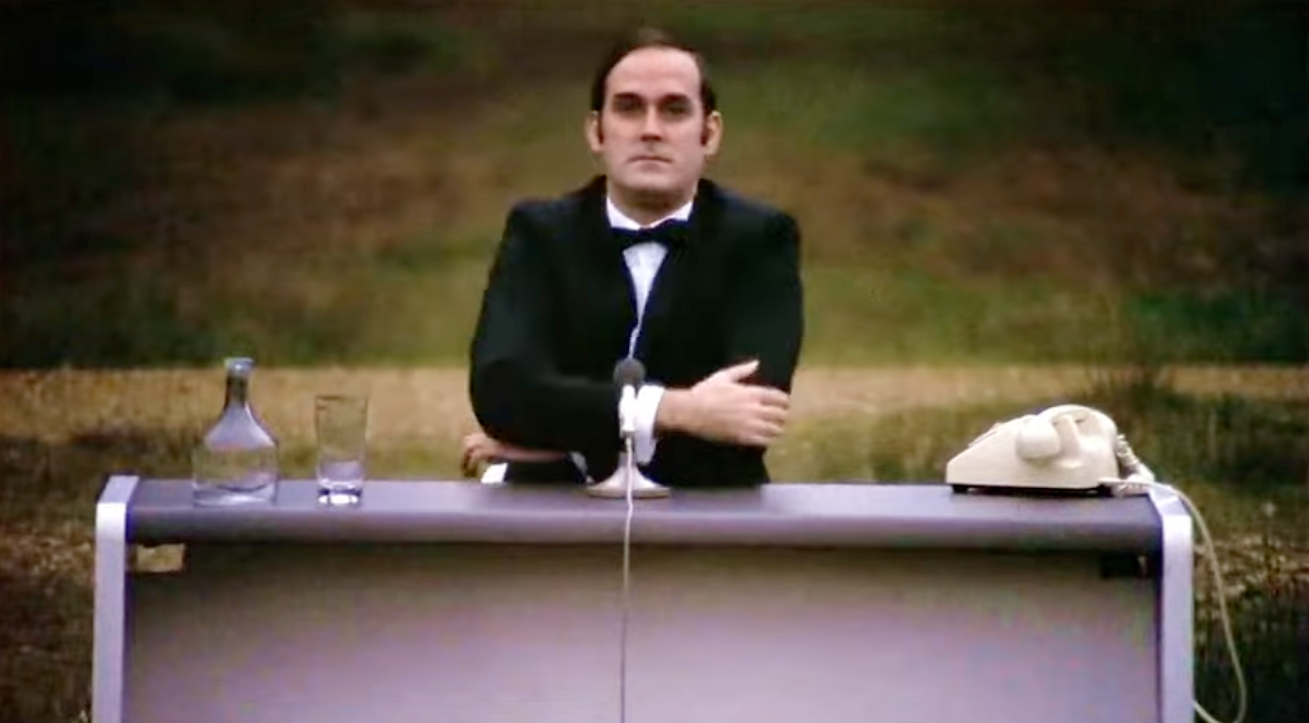
And now for something completely different: Germany is rearming—again. Yes, the country that gave us Beethoven, bratwurst, and two world wars is now, for the first time since 1991, hitting NATO’s 2% defense spending target. By 2029, it plans to ramp that up to 3.5%. And no, this isn’t a Monty Python sketch. It’s real.
This sudden fiscal enthusiasm comes after some, shall we say, gentle encouragement from President Trump, who threatened to ghost NATO like a bad Tinder date unless everyone ponied up. Now, all 32 member states are scrambling to meet their defense quotas like students cramming for an exam they forgot existed.
But let’s pause here and remember: the last two times Germany decided to suit up and throw its economic weight around, things got… messy. And by messy, we mean global conflicts. The kind with maps that change and movies starring Tom Hanks.
So while Europe watches Russian jets probe its airspace and drones buzz critical infrastructure, perhaps the real anxiety should come not from the East—but from memories of what happens when Germany starts spending like it’s 1938 and has something to prove.
Better stock up on TUMS. History, after all, has a sense of humor—and it’s often German.
With access to C2 Financials’ 100+ lenders and decades of personal experience in building, turning around and managing companies, raising capital, and running M&A I can help provide solutions to maximize your operations and secure optimal funding.
858-229-7199 – jdevilliers@c2financial.com

Royal Menus & Rebel Malts
The BBC reported that the pageantry of the recent state dinner hosted by His Majesty for the President of the United States was, as the British say, not short of a spectacle. Think 160 guests, 1,452 pieces of cutlery, and a menu written in French—because nothing says diplomacy like translation.
For President Trump’s visit, the kitchen rolled out the edible red carpet with:
- Hampshire watercress panna cotta with Parmesan shortbread and quail egg salad
- Organic Norfolk chicken ballotine, wrapped in courgettes and draped in a thyme-and-savory jus
- Vanilla ice cream bombe with Kentish raspberry sorbet centre and lightly poached Victoria plums (God save the bombe)
And the wine list? Positively baronial:
- Wiston Estate, Cuvée, 2016
- Domaine Bonneau de Martray, Corton-Charlemagne, Grand Cru, 2018
- Ridge Vineyards, Monte Bello, 2000
- Pol Roger, Extra Cuvée de Réserve, 1998
For the final flourish, drinks soaked in symbolism: a 1945 vintage port to nod at the 45th president (who doesn’t drink), and a 1912 cognac in honor of Trump’s Scottish-born mother’s birth year. Subtle as a bagpipe solo.
On a slightly less extravagant but infinitely more joyful occasion, I hosted a five-course whisky-paired dinner to celebrate a dear friend’s recovery from breast cancer. No palace, no footmen, no golden cutlery—just good people, good food, and five excellent excuses to pour Scotch.
First Course
Smoked duck breast with roasted pears
Paired with: Auchentoshan 12-Year-Old
One of Scotland’s few triple-distilled malts (think Irish finesse meets Glaswegian stubbornness). Born tough—bombed in the Clydebank Blitz, but still standing.
Tasting Notes:
- Nose: lemon zest, toffee, toasted almond
- Palate: vanilla fudge, mandarin, barley sugar
- Finish: dry, gingery, tidy like a Glasgow haircut
Second Course
Sautéed rack of venison with caprese salad & peach chutney
Paired with: Glenfiddich 12-Year-Old
Founded by William Grant and his seven children—yes, an actual family startup before it was cool. The whisky equivalent of a first kiss: fruity, honest, unforgettable.
Tasting Notes:
- Nose: green pear, apple, honey
- Palate: orchard fruit, vanilla crème, light toffee
- Finish: clean, malty, and just a whisper of pear skin
Third Course
Grilled ostrich steak with steamed asparagus & béarnaise sauce
Paired with: Balvenie 14-Year-Old Caribbean Cask
Craft nerds rejoice: floor maltings, in-house coppersmiths, and the wizardry of David C. Stewart MBE. Finished in rum casks, because why not?
Tasting Notes:
- Nose: toffee, ripe banana, vanilla pods
- Palate: honeyed malt, tropical fruit, brown sugar
- Finish: long, warm, with a cheeky rum-toffee whisper
Fourth Course
Braised beef short ribs on yellow sweet potato purée
Paired with: Oban 14-Year-Old
Small distillery, big character. Half Highlander, half seafarer—if whisky had a salt-and-pepper beard, this would be it.
Tasting Notes:
- Nose: orange peel, sea breeze, heather honey
- Palate: dried apricot, gentle smoke, brine
- Finish: citrus oil, peppered oak, clean saline snap
Fifth Course
Melktert (South African custard pie) with marinated berries & cream
Paired with: Laphroaig 10-Year-Old
This one’s not for fence-sitters. It’s loud, proud, and peaty as hell. Either you’re all in, or you’re coughing politely into your napkin. Royal Warrant approved, for what it’s worth.
Tasting Notes:
- Nose: campfire-on-the-shore, iodine, lemon peel
- Palate: sweet peat, ashy smoke, honeyed oak
- Finish: long, maritime, and medicinal enough to be sold in apothecaries
A grand evening, with five whiskies and even more opinions. Conversation got looser, laughter got louder, and in a moment of exuberance, one of our musical guests pledged to pair music with the next dinner’s food and drink.
Because of course—if you can match duck with Auchentoshan, why not Miles Davis with melktert?
Stay tuned. Next time: notes on the playlist.
Ps. Reminded me of the dinners at the Alpenhorn

Need a steady hand?
Free consult for strategy. Free consult for capital. Clear options, zero pressure.

Finding God in the App Store
The recent mass shootings—in churches, waterfront bar, and the brutal killings of Charlie Kirk and Iryna Zarutska—have shaken our sense of morality and humanity. How do we respond to a world where violence feels both random and relentless? Are we just witnessing the natural order – survival of the fittest? Or something deeper unraveling within society?
And in all this, where does God fit?
According to a recent New York Times article, more and more people are turning to faith-based chatbots. Trained on religious texts, these AI tools act like on-demand spiritual guides—pastors, priests, imams, or rabbis in your pocket. Some even claim to speak on behalf of God.
For a generation that’s never stepped inside a church, mosque, or synagogue, this might be the first real contact with faith.
These bots are meeting real needs: loneliness, anxiety, trauma, financial pressure. And unlike traditional clergy, they’re available 24/7. But here’s the catch—they don’t discern or challenge. They reflect what users want to hear, not necessarily what they need to hear. It’s less spiritual wisdom, more data-driven affirmation.
It’s like having a custom-made god—one that fits your lifestyle and never pushes back. You get the comforting phrases: “Love your enemies,” “Turn the other cheek,” “Ask and you will receive.” But what gets lost is the harder truth from that same sermon: “The road is narrow that leads to life, and few find it. The road to destruction is wide, and many go that way.”
That’s the real dilemma. When everyone builds their own version of God, we lose moral absolutes. Without a shared compass, how do we determine what evil is and then walk in the same direction towards a solution? How do we respond to suffering, injustice, or mass violence?
Faith tech may be booming—but in a world on fire, we need more than AI comfort. We need conviction, clarity, and a God who doesn’t just echo us—but calls us higher.



Stuck at the helm? Let’s chart the next move.
If your business is wrestling with growth, team, or cash-flow puzzles—or you’re weighing how to fund the next big step—bring me your mess. I’ll bring a map.
Two simple, no-pressure ways to start:
-
Free Coaching Consultation
A focused 20–30 minutes to assess what’s blocking momentum and sketch 2–3 practical plays you can run this month. -
Free Capital Options Call
If you need financing for a new purchase, a refi, or a life event, we’ll review current options and model what’s smart—not just what’s available.
No jargon. No hard sell. Just clear ideas from someone who’s been in the wheelhouse when the water wasn’t calm.
Ready?
Chart a Coaching Call —or— Explore Capital Options +18582297199
Prefer email? Send a quick note to [jdevilliers@c2financial.com] with “Let’s talk” in the subject, and tell me what you’re navigating.
General Disclosure
This publication is for informational and educational purposes only and reflects the personal opinions of the author as of the date of publication. The views expressed do not necessarily reflect the views of any employer, client, or affiliated organization. The author is not selling, brokering, or offering any securities, investments, insurance, or other financial products through this publication.
No Professional Advice. Nothing herein is legal, tax, investment, accounting, or other professional advice. You should consult your own qualified advisors before making any decision.
No Recommendation or Solicitation. References to companies, markets, instruments, or strategies are illustrative and not recommendations, offers, or solicitations to buy or sell any product or service.
Sources and Accuracy. Some content summarizes or links to third-party sources believed to be reliable; however, the author does not warrant the completeness, timeliness, or accuracy of any information and assumes no responsibility for errors or omissions. Markets and laws change—information may become outdated without notice.
No Duty to Update. The author has no obligation to update any content, even if subsequent events make statements inaccurate.
Performance and Risk. Past performance is not indicative of future results. All investments involve risk, including the possible loss of principal.
No Client Relationship. Reading or interacting with this publication does not create a client, advisory, or fiduciary relationship with the author or [Your Company Name].
Third-Party Links. Links are provided for convenience and do not constitute endorsements. The author is not responsible for third-party content or policies.
Conflicts & Affiliations. The author may hold positions or have business relationships relevant to topics discussed and will endeavor to disclose material conflicts where appropriate.
© 2025 Johann de Villiers. All rights reserved. Contact: jdevilliers@C2Financial.com .
This licensee is performing acts for which a real estate license is required. C2 Financial Corporation NMLS #135622 is licensed by the California Department of Real Estate, Broker # 01821025; Arizona Department of Financial Institutions, Broker # 919209; Colorado Division of Real Estate; Florida Office of Financial Regulations, OFR# MBR3519; Tennessee Department of Financial Institutions, DFI# 135622; Washington Mortgage Broker License MB-135622. Loan approval is not guaranteed and is subject to lender review of information. All loan approvals are conditional, and all conditions must be met by borrower. Loan is only approved when lender has issued approval in writing and is subject to the Lender conditions. Specified rates may not be available for all borrowers. Rate subject to change with market conditions. C2 Financial Corporation is an Equal Opportunity Mortgage Broker/Lender. The services referred to herein are not available to persons located outside the state of CA, AZ, CO, FL, TN and WA.
Johann de Villiers NMLS # 71252, CA DRE # 01746466, AZ #1040617, CO # 100534343,
FL #LO111486, TN # 71252, WA # MLO-71252

Related Posts